Shotgun Metagenomics
Analysis of taxonomic profile, functional profile, and diversity of bacteria, and analysis of the taxonomic profile and diversity of fungi and/or viruses
Specialised service
Taxonomic, functional, and diversity analysis
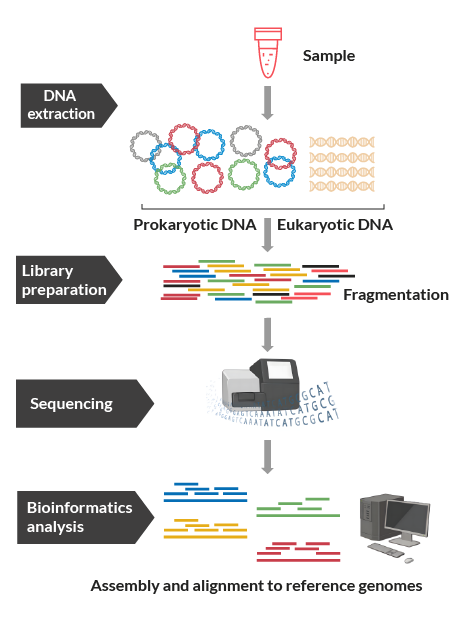
Shotgun metagenomics allows the composition and function of microbial communities present in any type of sample to be characterised without the need for prior cultivation (faeces, saliva, soil, water, and others).
Unlike targeted amplicon sequencing techniques such as 16S rRNA gene sequencing, microbiome analysis using shotgun sequencing generates complete fragmentation and sequencing of the sample’s DNA. This allows:
- High-resolution taxonomic identification down to species or strain level.
- Comprehensive functional characterisation of the microbiome by gene annotation and functional profiling.
- Detection of mobile genetic elements and antibiotic resistance genes, or genes associated with specific microbial traits.
It requires rigorous methodological control both in the laboratory and in bioinformatic analysis, and can integrate microbiome data with other variables collected during the experiment.
This comprehensive metagenomic analysis is ideal for research that not only requires knowing “who is there” but also “what they can do”, and is essential in areas such as microbial biomarker discovery, resistome studies, and monitoring of therapeutic interventions.
What does our service include?
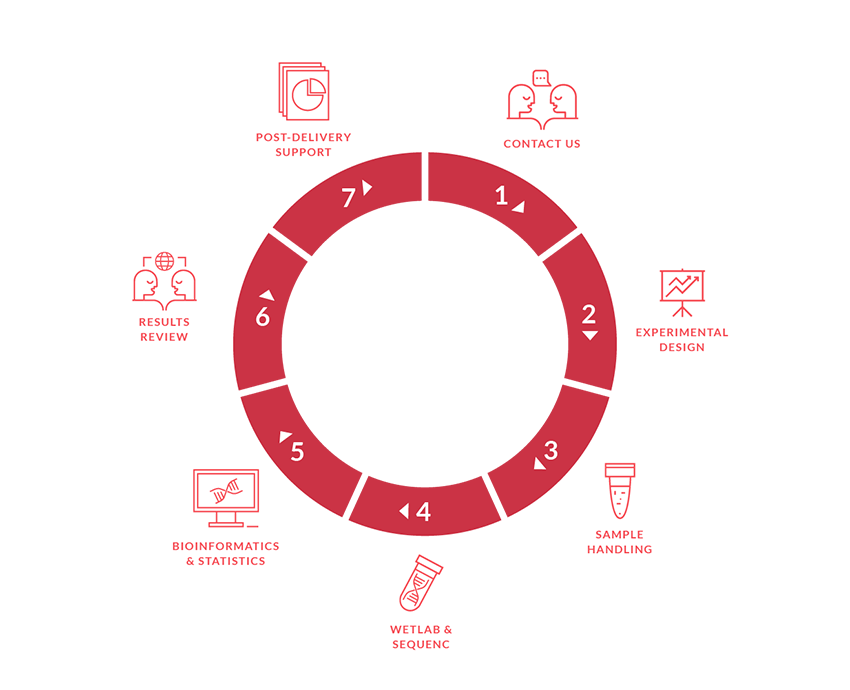
Scientific and technical consultancy
- Experimental design
- Analysis strategy
- Sampling protocol
- Sample logistics solutions
- Biobank and storage service before analysis
DNA extraction and sequencing
- Laboratory with certified clean-room facilities
- Validated extraction and purification protocols for more than 50 sample types
- Library quality assessment using capillary electrophoresis
- Illumina NovaSeq 2×150 bp
- 40 million reads (20M paired-end reads) guaranteed per sample, which are adjustable
Results delivery meeting
- Interactive reports featuring dynamic graphs and tables
- Materials and methods documentation
- Downloadable publication-ready figures prepared at the cutting edge of the field
Tailored bioinformatics analysis
- Quality filtering and validation against the company’s project history database
- Proprietary pipelines designed to customise each analysis
- Taxonomic assignment, taxonomic diversity analysis, and functional annotation. Additional modules including de novo assembly, MAG recovery, and metabolic pathway enrichment analysis
- Two hours of post-delivery consultation included with every full study
More information
View our service datasheets.
Frequently Asked Questions about our Shotgun Metagenomics Service
What is shotgun metagenomics and when should it be used?
Shotgun metagenomics is the sequencing of the total DNA present in a sample (without targeted PCR amplification). It enables taxonomic and functional profiling with resolution down to species or strain level, the detection of genes, enzymes, and metabolic pathways, and the resistome and virulence factors. It is the recommended approach when maximum resolution is required, when studying metabolic functions, or when recovering MAGs (metagenome-assembled genomes).
What types of samples can be analysed?
Our shotgun metagenomic analysis service is highly versatile and compatible with all types of samples.
- Human samples: gut, oral, skin and vaginal microbiome.
- Environmental samples: soil, water (marine and freshwater) and air microbiome.
- Agri-food samples: plant microbiome (endophytes and epiphytes), fermented foods, soils and industrial surfaces.
- Animal samples: ruminant, poultry and fish microbiome.
We process more than 50 validated sample types, ensuring high-quality DNA extraction and shotgun sequencing. Please do not hesitate to contact us regarding the sample types included in your study.
What types of studies is shotgun metagenomics applied to?
When necessary, it is used to answer both of the following questions: “Which microorganisms are present in this sample at species level?” and “What metabolic capacity do the microorganisms in this sample have?” It enables the identification of functional biomarkers with prognostic or diagnostic value in product evaluation studies, control versus treatment comparisons, longitudinal characterisation studies, descriptive studies, and other experimental designs.
What sequencing depth is recommended?
This depends on sample complexity and project objectives: from 5–10 million reads per sample (basic taxonomic/functional profiling) to 20–50+ million reads for MAG recovery or fine-scale detection of low-abundance genes. Contact us using the enquiry form so we can assess your project as a whole.
How will I receive the results?
Throughout the process, you will be supported by a Project Manager who will keep you informed of your project’s status. Once the analysis has been completed, you will receive a PDF guide together with login credentials to access and download the results from the Microomics server. You will receive the raw sequencing data, a report detailing the materials and methods used in the project, and an html file that allows you to explore the results in dynamic tables and graphs, download figures, and perform comparisons between alpha and beta diversity models.
How do you ensure data and deliverable quality?
Microomics has its own certified clean-room laboratory for DNA extraction. In addition, we use negative controls (extraction blanks/NTCs) and positive controls (mock communities), generating quality control checkpoints throughout the project. We maintain contact with the researcher during the entire process, providing updates on the progress of the samples throughout our workflow.
What is the difference between amplicon sequencing and shotgun metagenomics?
16S/18S/ITS amplicon sequencing uses PCR amplification of a marker gene to generate taxonomic profiles with relative abundance data. It is faster and more cost-effective but provides lower taxonomic resolution, generally at the genus level.
Shotgun metagenomics sequences all DNA present in a sample without targeted PCR amplification, enabling species- and strain-level identification, direct functional analysis of genes/pathways, and recovery of metagenome-assembled genomes (MAGs). It requires greater sequencing depth, bioinformatics processing, and budget.
In summary, amplicon sequencing is best suited for efficient comparative microbiome characterisation whereas shotgun metagenomics is better when maximum taxonomic resolution and functional information are required. We recommend discussing your project objectives with the Microomics team to determine the most appropriate approach for your microbiome study.
Contact Form
Contact us
Address
C/ Laureà Miró, 408-410
08980, Sant Feliu del Llobregat
Barcelona
Contact
info@microomics.com
Tel: +34 938 874 488
Opening hours
Monday to Thursday: 9:00 AM – 5:00 PM
Friday: 9:00 AM – 3:00 PM